WhatsApp Messaging
at Scale
WhatsApp is how we reach frontline employees, primarily in Israel, the Middle East, and Europe. Meta kept blocking marketing messages, and we were still paying for them. I built a fallback: when a send is blocked, the operational content of the message goes out as a utility template, then SMS if WhatsApp still does not deliver. That reached 98% deliverability and cut the cost of sending again and again.
WhatsApp is how Bites reaches frontline employees: people who don't sit behind a desk. The work is primarily across Israel, the Middle East, and Europe. If a message does not land, the training never arrives.
The thing that was going wrong: Meta kept blocking the messages. They were treated as marketing, so they never reached the employee. And we were still paying for every blocked send: then paying again to send the same marketing message over and over.
Clients were not happy. Employees were missing content. The bill kept growing because retries of a blocked marketing message cost the same as a message that actually arrived.
Meta splits WhatsApp Business traffic into two categories. That split is the whole product:
- Marketing messages: promotional or campaign style sends. These are the ones Meta blocks. They are also the expensive ones, especially when you resend them after a block.
- Utility messages: operational messages the user needs to see. Utility messages are treated as operational, cost less, and aren't subject to the same marketing limits.
The idea: stop paying to push a blocked marketing message again. When a send is blocked, the fallback sends the operational content of the message (what the employee actually needs, such as the training they must complete) as a utility template. If WhatsApp still does not deliver, it falls back once more, to SMS.
I designed and shipped a fallback mechanism so a blocked send never dies silently and never burns budget on the same marketing retry:
- WhatsApp send: the original message goes out to the frontline employee.
- If Meta blocks it → utility fallback: the same employee gets the operational content as a utility template. Utility templates are priced lower than marketing templates and aren't subject to the marketing-message limits.
- If WhatsApp still does not arrive → SMS fallback: the utility path falls back to SMS, so the employee still gets the message.
Nothing fails for the employee. The content reaches them on the first channel that actually works, without paying to fire the same blocked marketing message again and again.
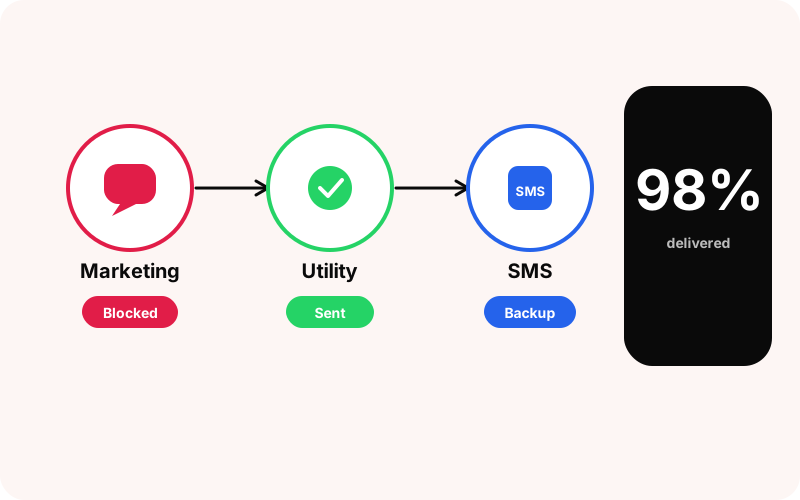
Deliverability went up. The bill went down. Frontline employees actually got the message:
This is how I work: I learned how the platform actually decides what gets through, designed a fallback around that rule, and shipped it so employees get the message and the company stops paying for blocks.
98% is delivered messages divided by sent messages across all client distributions, measured after the fallback was live. The $10,000+ yearly saving comes from sending operational content as utility templates instead of paying marketing rates for blocked and resent messages.
The fallback only works for content that genuinely qualifies as operational. Promotional content stays on marketing templates, so I keep the two clearly separated and follow Meta's template category rules.